The Matching Set Problem Nobody Names: The Top and Bottom Age Differently
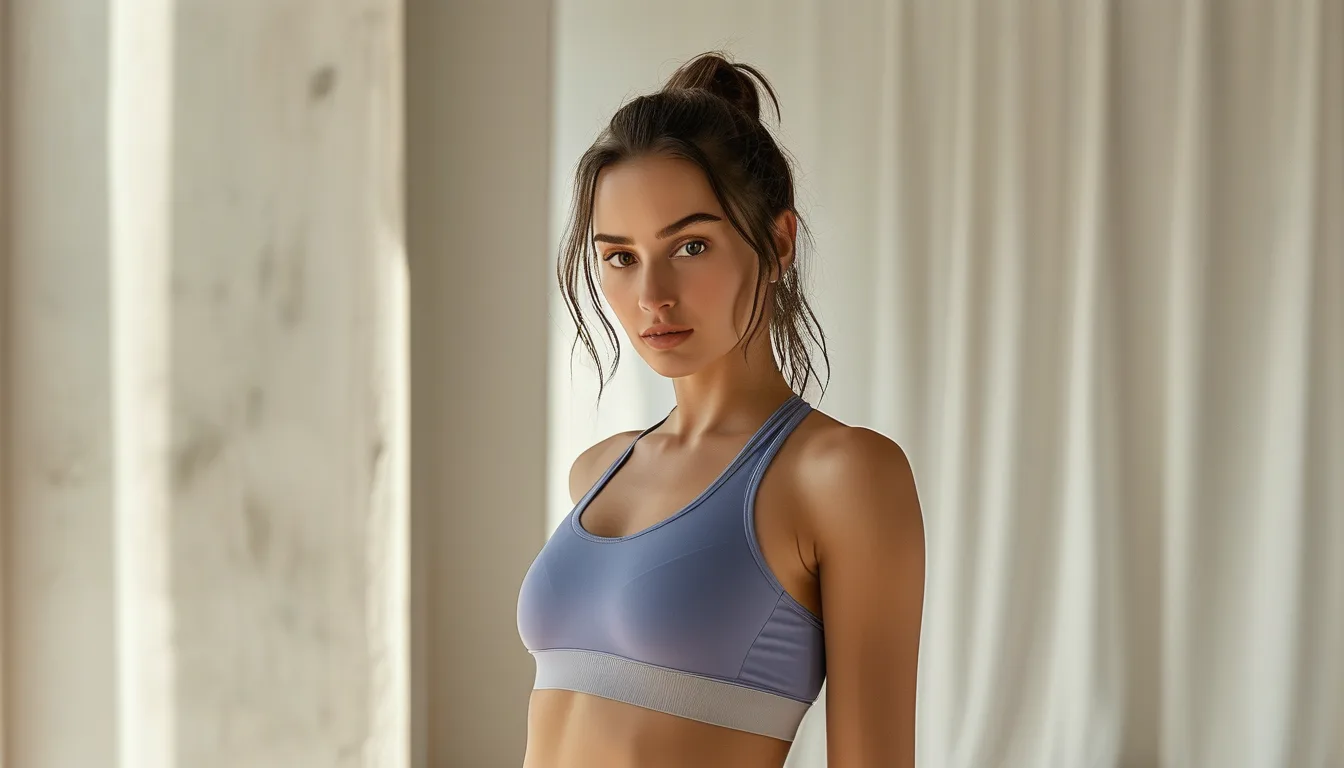
Quick Answer: Tops and bottoms in a matching set are usually cut from the same fabric but live completely different lives. Leggings get stretched, sat on, and washed hot; tops get sweat at the underarm and sun on the shoulders. After 15-20 washes, the two pieces drift in color and hand-feel and stop reading as a set.
You pull out the set you loved in March and something is off. Nothing is damaged. Nothing has a hole. The pieces just do not look like they came from the same place anymore, and you cannot point to what changed.
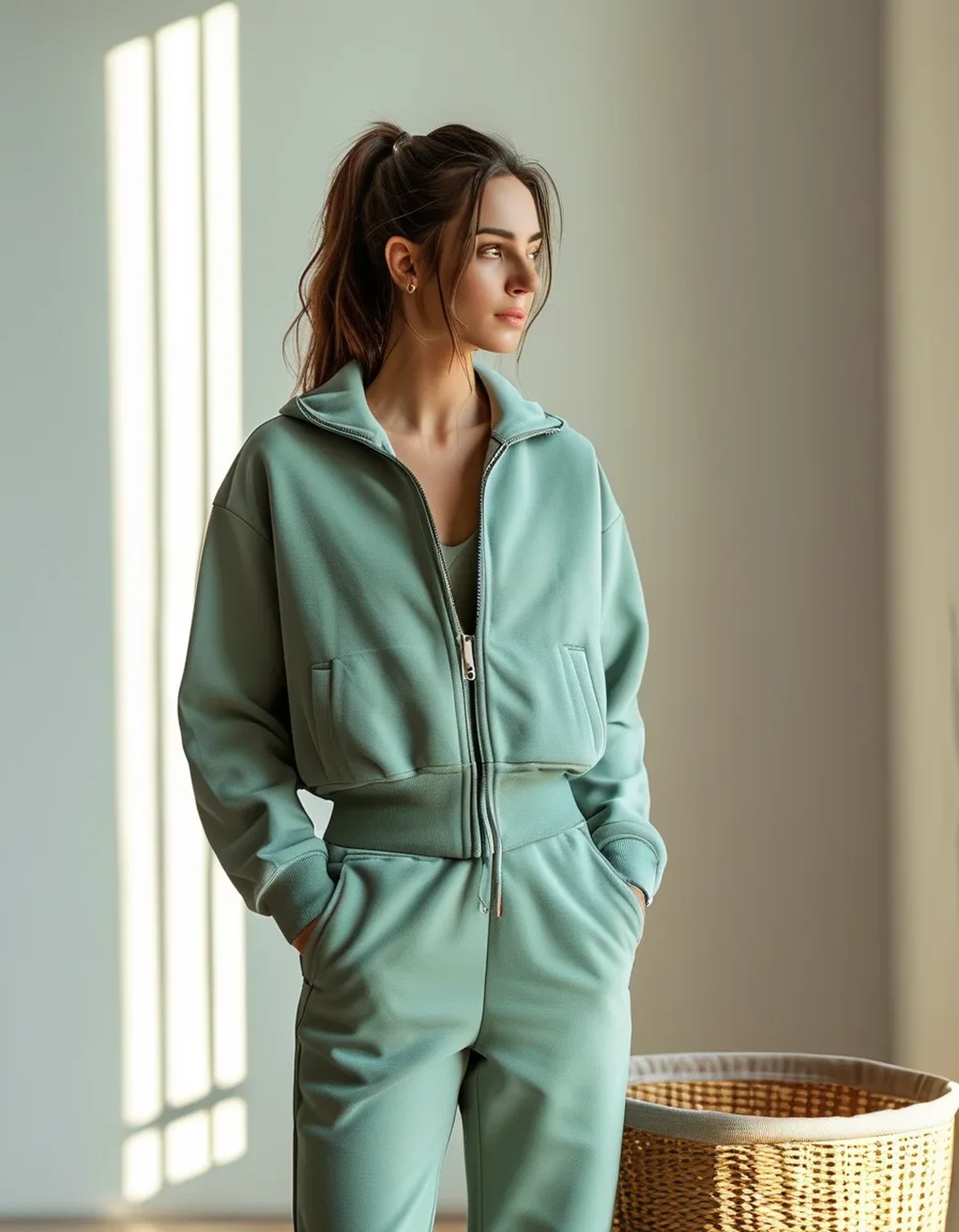
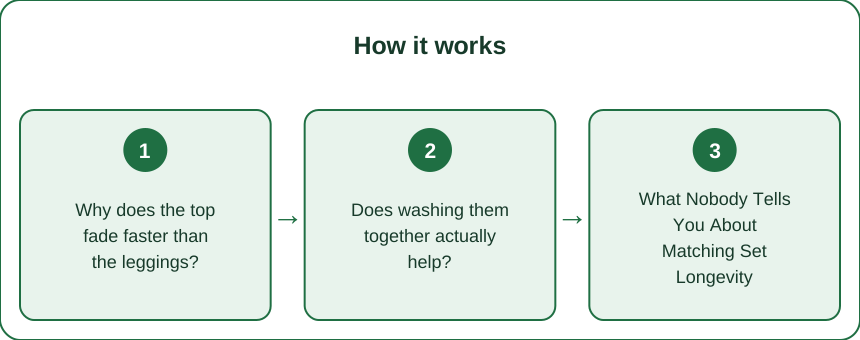
Why does the top fade faster than the leggings?
Two reasons, and both are boring. Sun and sweat land unevenly. Your shoulders and upper back take direct light in a way your thighs almost never do. Your underarms take a concentrated dose of sweat salts and deodorant aluminum.
Meanwhile the leggings take mechanical stress instead. They stretch to 130-150 percent of resting width every squat, they abrade against seats and mats, and their color loss is diffuse rather than patchy.
So six months in, the top has patchy lightening at the shoulders and a slightly stiff underarm, and the bottoms have overall softening with pilling at the inner thigh. Different damage, different look, same wash pile.
Does washing them together actually help?
It helps a little, and less than people assume. Washing together equalizes water temperature and detergent exposure, which is the smaller half of the equation.
What it cannot equalize is the sun exposure and sweat chemistry that already happened before the wash. It also cannot equalize spin stress, because a lightweight bra top and a compression legging behave completely differently in the drum.
The move that actually helps is washing both inside out in cold water and skipping the dryer entirely. Heat is what sets the divergence, because polyamide and elastane lose recovery permanently above about 105F.
What Nobody Tells You About Matching Set Longevity
The set is only as coordinated as its most-worn piece. Almost everyone wears the leggings twice as often as the top, because leggings go with everything and the matching top only goes with the set.
That asymmetry is the actual killer. A 2:1 wear ratio means that after a year your leggings have 100 wash cycles and your top has 50. No detergent fixes a 50-cycle gap.
The counterintuitive fix is to wear the top more, not the leggings less. Pair the set’s top with black leggings on off days. Pair the set’s leggings with a plain tank. Even out the mileage and the pieces stay siblings instead of drifting into cousins.
Also worth knowing: deodorant residue is the single biggest cause of underarm stiffening, and it responds to a 30-minute soak in cool water with a splash of white vinegar before the wash.
How do I tell if a set will hold up before I buy it?
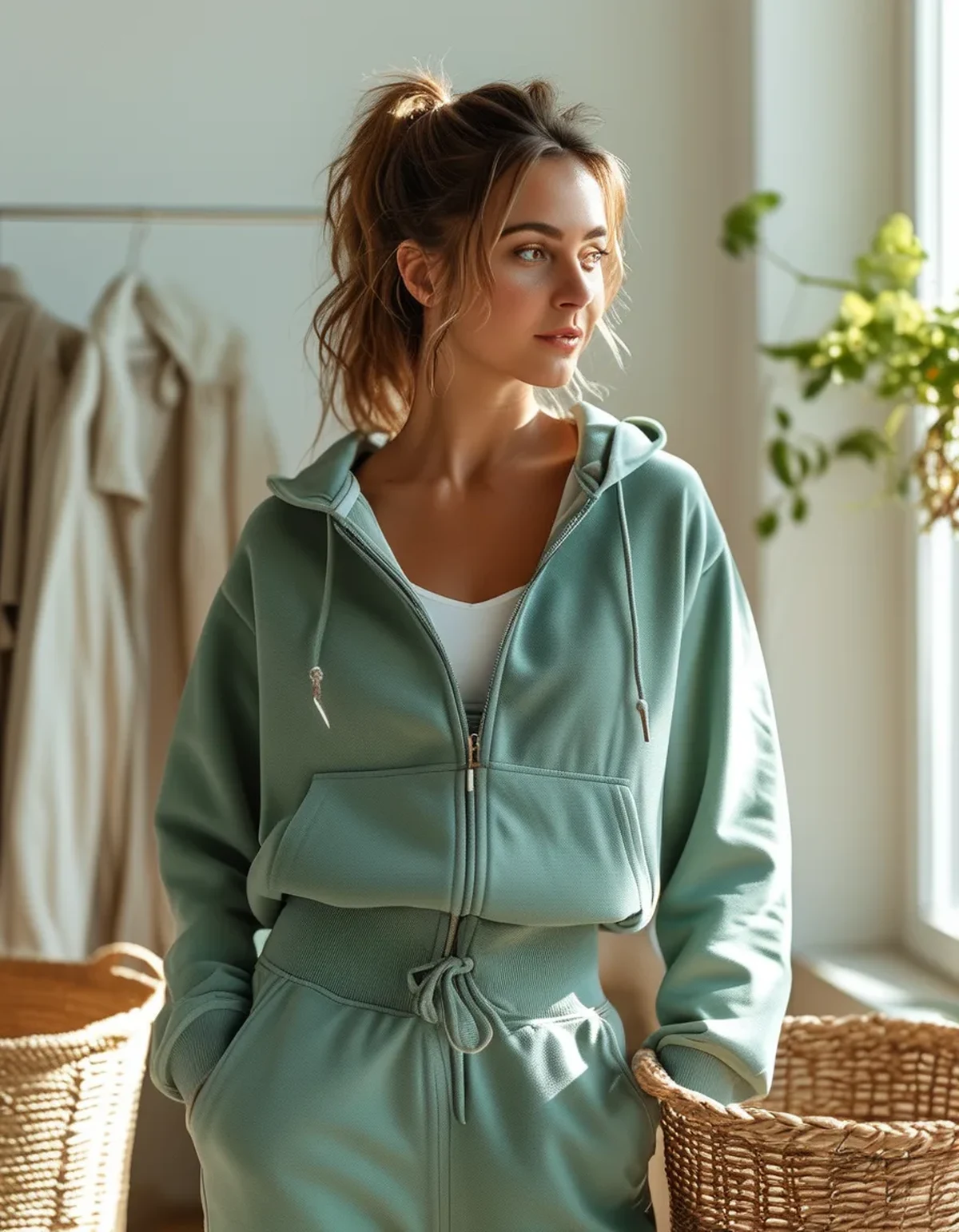
Check the composition tag on both pieces, not one. Brands frequently use a different blend for the top than the bottom, especially when the top has a built-in shelf bra.
If the leggings are 75/25 nylon-elastane and the top is 88/12 poly-elastane, they will fade at different rates no matter what you do. Same color today, different color by fall.
Then pinch and release the fabric at the seam. If either piece takes more than a beat to flatten back out, that is low recovery and it will bag out first. A set is only worth buying when both pieces snap back the same way.
What do I do with a set that already drifted?
Stop trying to make it a set again. Faded pieces do not come back, and dyeing at home almost always exposes the elastane as a lighter thread.
Instead, split the set on purpose:
- Faded top plus a dark solid legging reads as intentional tonal styling
- Softened legging plus a crisp tank becomes your everyday pair
- Both pieces stay in rotation instead of one sitting in a drawer
That is not a downgrade. Late summer into fall is exactly when tonal mixing looks best anyway, and a slightly washed sage over black is a better outfit than a set that is 90 percent matched and reads as a mistake.
FAQ: Matching Set Questions, Answered
How many washes before a set visibly drifts?
Around 15-20 washes with dryer heat, or 40-plus if you cold wash and hang dry. The dryer roughly halves the timeline.
Should I buy two of the top?
If you genuinely love the set, yes. A second top rotates the wear and keeps the set matched for about twice as long, which is cheaper than replacing the whole set.
Does hanging versus folding matter?
For tops, hang. For leggings, fold. Hanging leggings by the waistband slowly stretches the band under their own weight, and the waistband is usually the first thing to go.
TL;DR:
- Tops fade from sun and sweat, leggings wear from stretch and abrasion, so they diverge even under identical care
- Cold wash inside out and no dryer keeps them matched roughly twice as long
- The real culprit is uneven wear, usually 2:1 in favor of the leggings
- Once drifted, split the set on purpose rather than fighting it
The fastest thing you can change today is the dryer. Heat is what locks in the difference, and hanging both pieces costs you nothing but an extra ten seconds. After that, start wearing the top on days you are not wearing the set, and you will get a second year out of pieces that usually give you one.
See It in Motion
Seen here: High Waist Yoga Leggings with Inner Pocket — shop it on bubblelime.com
Keep Reading
This article is for general informational and styling purposes only. Fit, sizing, and product availability may vary.