When a Matching Set Actually Flatters vs. When It Doesn't
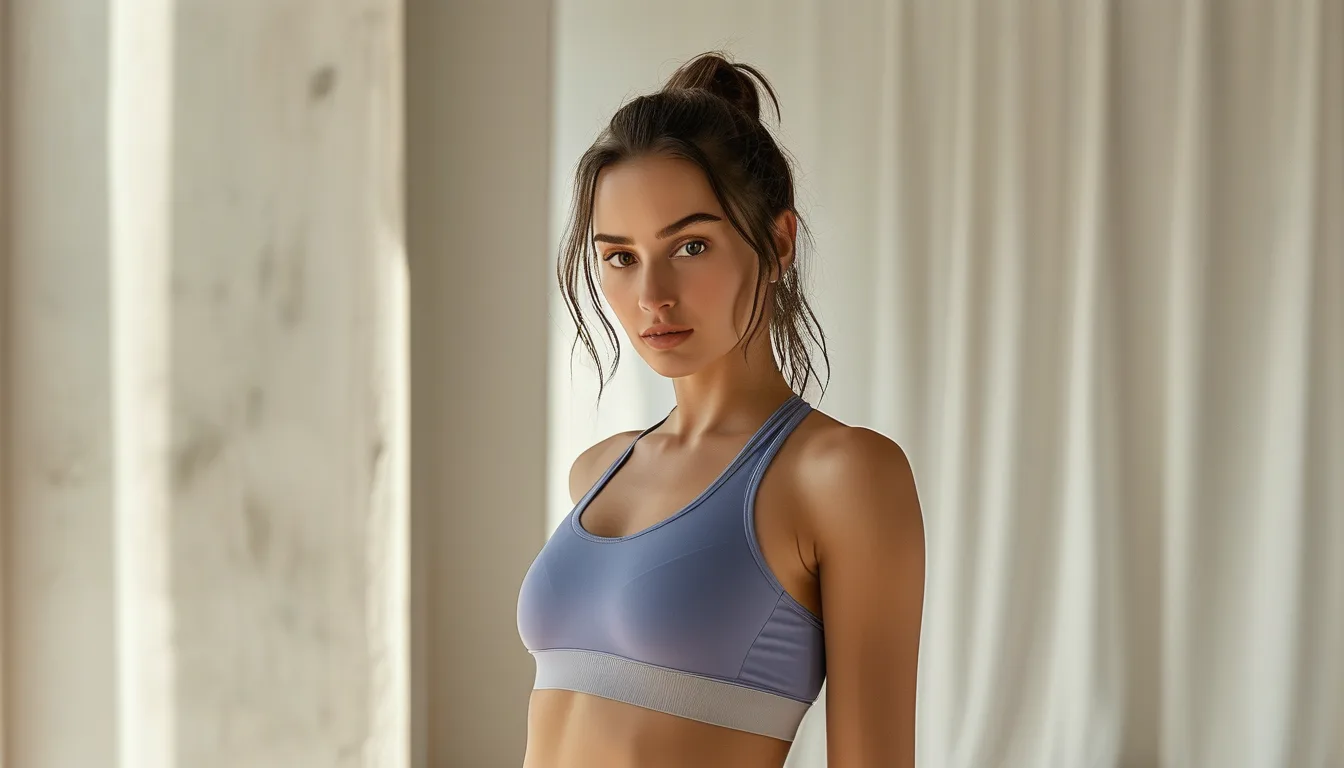
Quick Answer: Matching sets flatter most when the top and bottom share a similar fit intensity (both fitted or both relaxed) and when the color reads as one continuous block. They flatter least when mismatched textures or drastically different fits break the visual line.
A matching set looks effortless on the model and somehow different on you. The gap usually isn’t the set itself — it’s whether the fit and proportion actually suit your body and the activity you’re wearing it for.
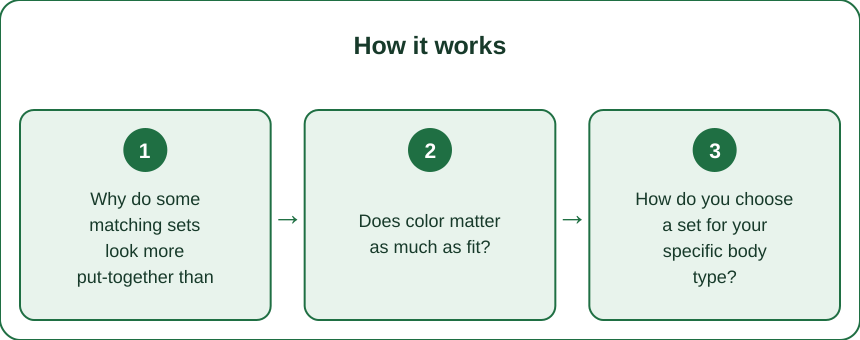
Why do some matching sets look more put-together than others?
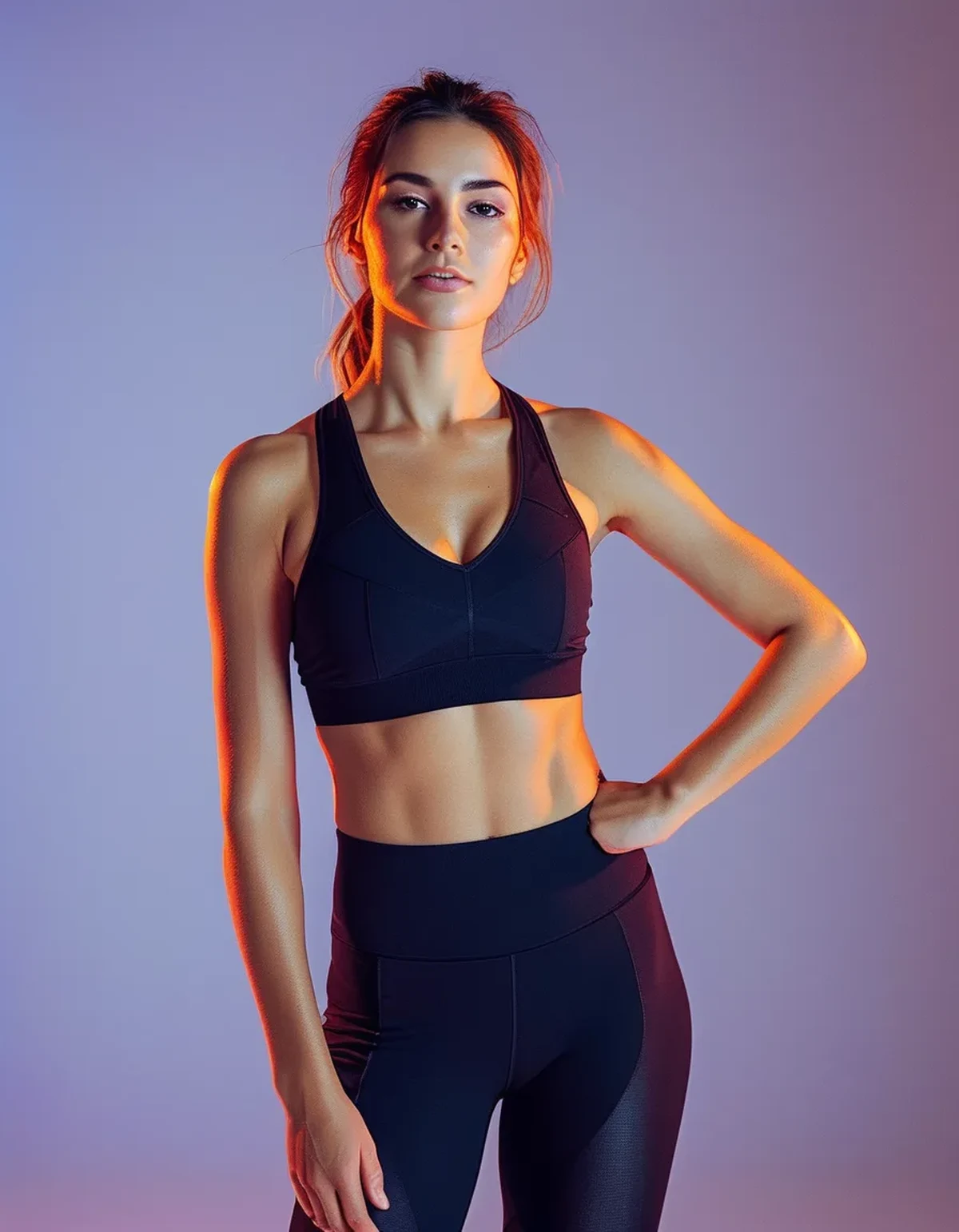
A set works best when the fit intensity matches — a fitted sports bra with fitted leggings, or a relaxed tank with relaxed joggers. Mixing a tight top with baggy bottoms (or vice versa) breaks the cohesive line that makes matching sets look intentional in the first place.
Does color matter as much as fit?
Yes — a true color match (same dye lot, same fabric finish) reads as one continuous silhouette, which is the main visual trick that makes matching sets appear elongating and polished. A near-match in slightly different shades can actually look more mismatched than two totally different colors worn together deliberately.
How do you choose a set for your specific body type?
If you’re shorter, a set with a higher-cut bottom and a slightly cropped top avoids visually cutting your torso in half. If you’re proportionally longer in the torso, a set with a slightly lower rise bottom and a longer top length balances things out better than a standard-length pairing.
When does mixing separates work better than matching?
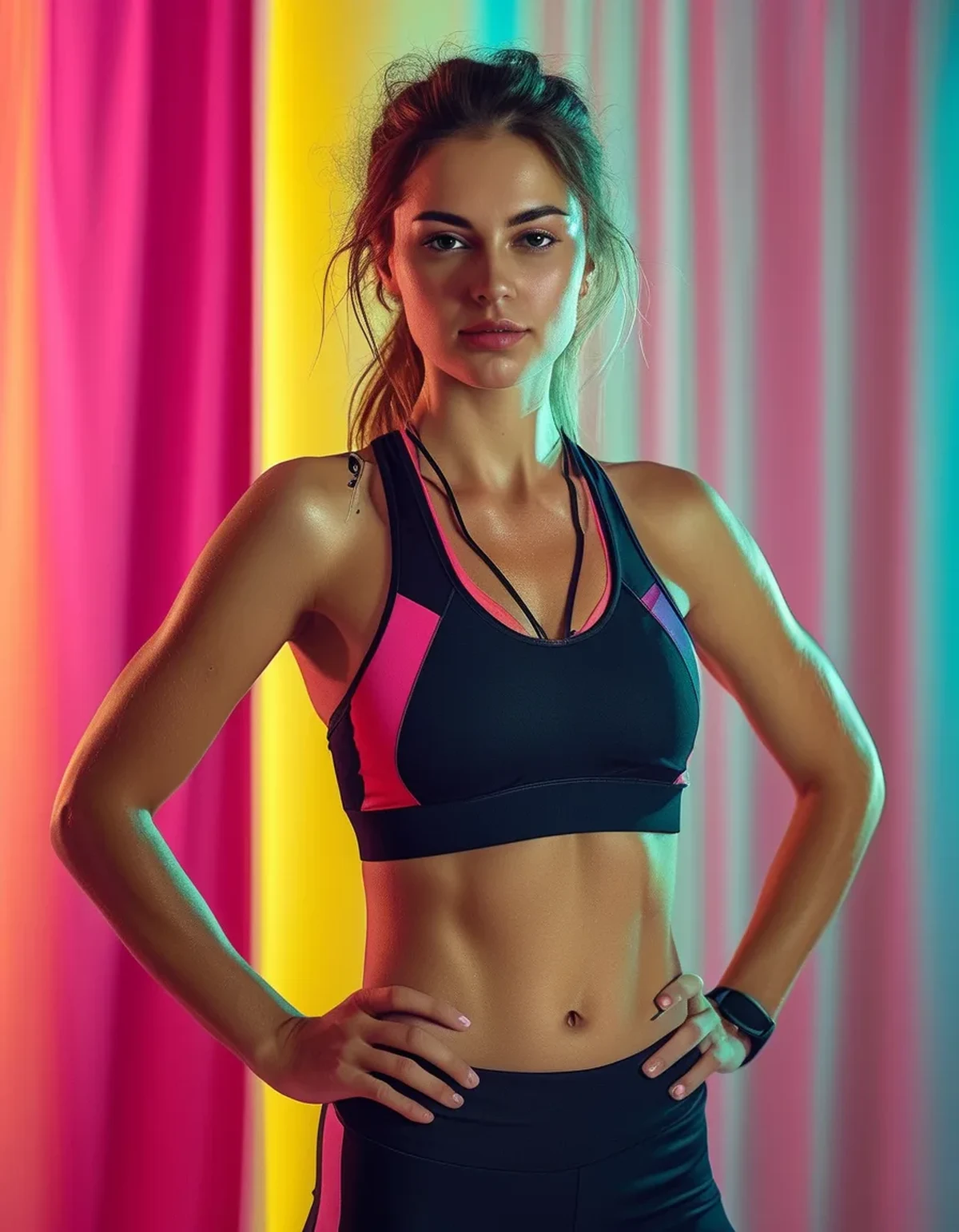
For high-intensity training where you need different support levels top and bottom (like a high-support bra with compression leggings from different lines), separates chosen for function first often perform and look better than a set chosen for coordination alone.
What’s the most common matching set styling mistake?
Choosing a set purely by color trend without checking that both pieces actually fit your proportions individually. A set is still two separate garments — if the top doesn’t fit well on its own, matching it to bottoms doesn’t fix that.
FAQ: Matching Set Questions, Answered
Can you wear a matching set for everyday errands, not just workouts?
Yes — sets with a slightly more structured or elevated fabric finish transition well from gym to errands without looking purely athletic.
Do matching sets actually improve workout motivation?
Some people report feeling more put-together and motivated in a coordinated set, though the effect is more psychological than performance-based.
How do I style one matching set multiple ways?
Swap the top for a different color while keeping the bottom, layer a jacket over just the top half, or wear the pieces with entirely different items — one set doesn’t have to mean one single outfit.
TL;DR:
- Matching fit intensity (both fitted or both relaxed) matters more than matching color alone
- True color matches read as one elongating silhouette; near-matches can look mismatched
- Choose rise and top length based on your torso proportions, not just the trend
- For high-intensity training, separates chosen for support often outperform a coordinated set
Before buying, check that each piece fits and flatters on its own — the ‘matching’ part should be the bonus, not the fix.
See It in Motion
Seen here: High Waist Yoga Leggings with Side Pockets — shop it on bubblelime.com
Keep Reading
This article is for general informational and styling purposes only. Fit, sizing, and product availability may vary.