The Third Piece Rule: When a Matching Set Needs One and When It Ruins It
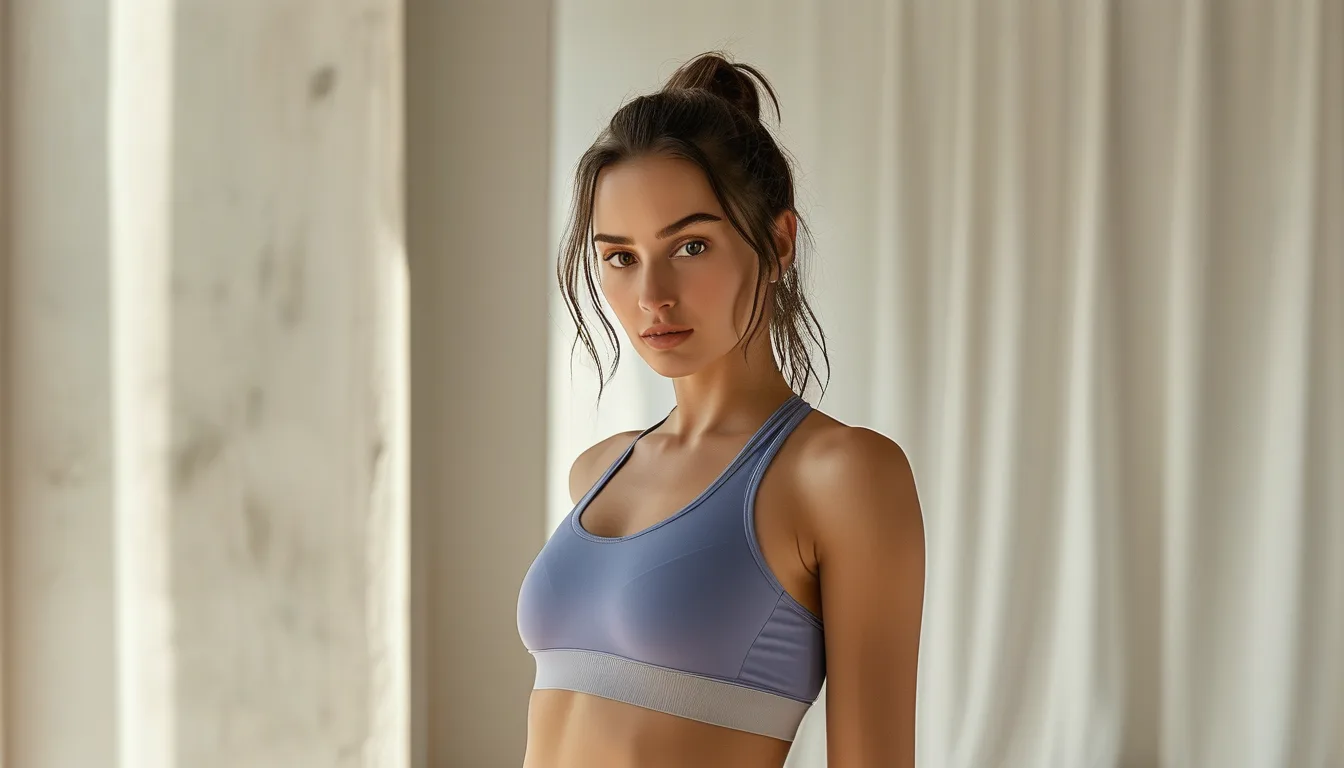
Quick Answer: A matching set needs a third piece when the two pieces are the same color and similar texture, because that combination reads as a uniform in photos and in person. The right third piece breaks the color block without competing — an open layer in a neutral, a contrasting shoe, or a bag with visible texture. The wrong third piece is one that matches the set closely enough to look like it was supposed to be part of it.
You bought the set because it looked complete. Then you wore it twice and it started feeling like a costume.
The set is fine. It is missing the piece that makes it read as an outfit rather than an item.
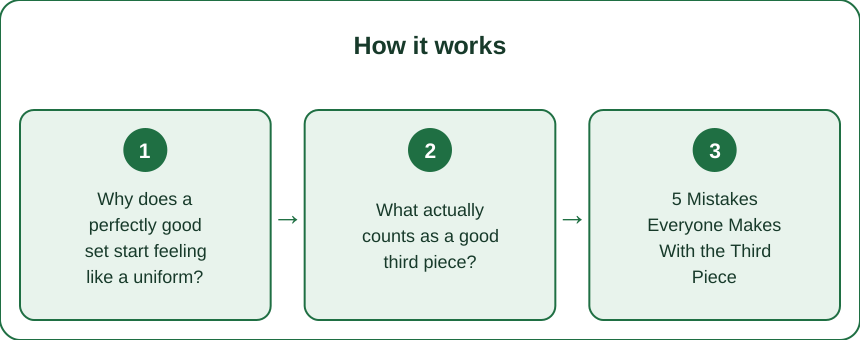
Why does a perfectly good set start feeling like a uniform?
Because matched pieces remove every visual decision, and the eye notices.
Same color plus same texture equals one shape. When your top and bottom share a color and a fabric finish, the eye stops reading two garments and reads a single silhouette. That silhouette is only as flattering as its outline, with no internal interest to look at.
Uniforms are defined by exactly this. Scrubs, tracksuits, and team kits are all matched sets in a single texture. Your brain has strong associations with that combination, and they activate whether you want them to or not.
Repetition accelerates it. A set worn to the same places at the same times becomes your signature faster than separates do, because there is nothing varying inside the outfit.
And matched sets photograph flatter than they look in person. A camera compresses the subtle sheen differences your eye picks up live, so the set that has visible texture variation in your mirror becomes one solid block on a phone screen. If your set looks worse in photos than in the mirror, this is why.
What actually counts as a good third piece?
It has to add a variable the set does not already have.
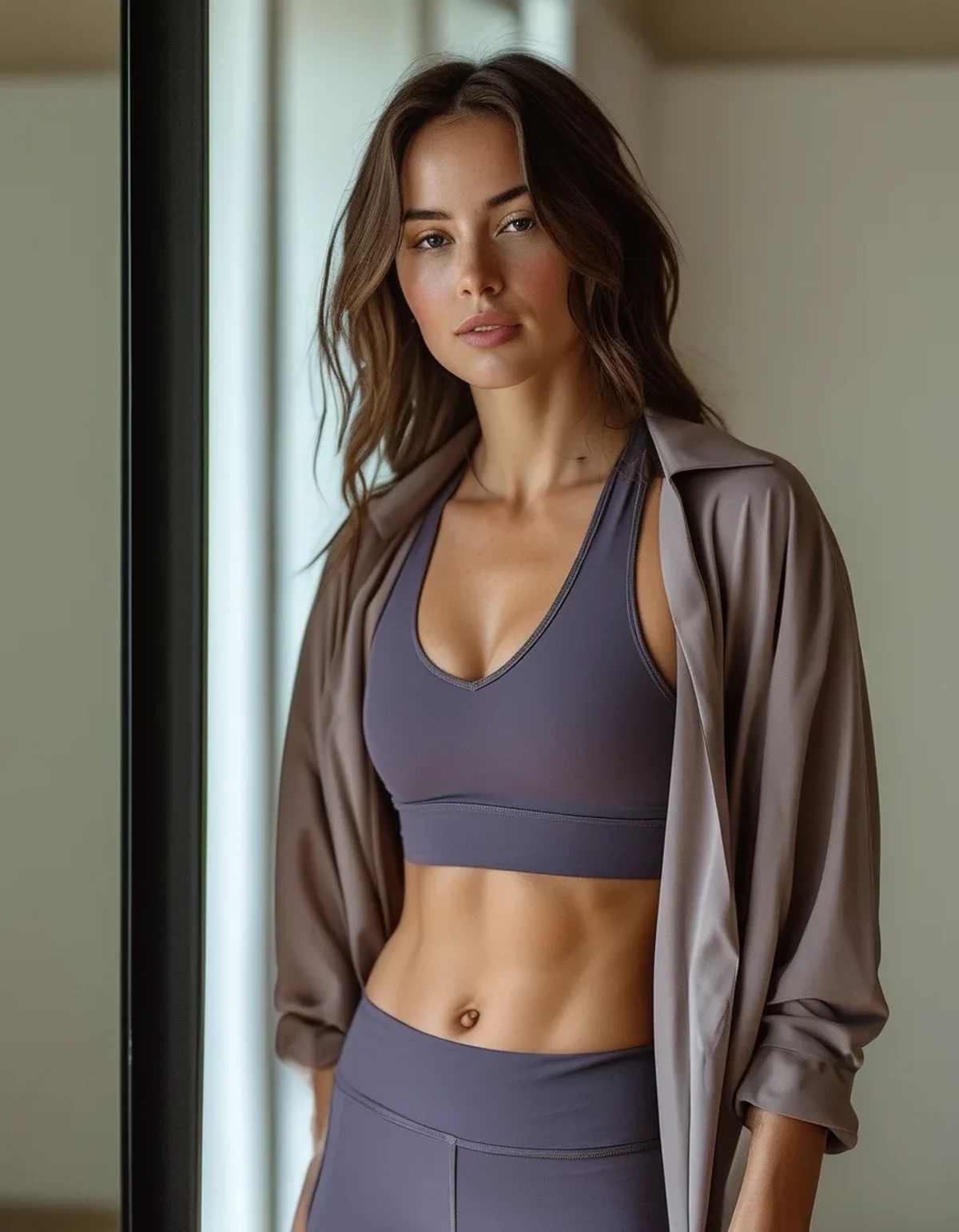
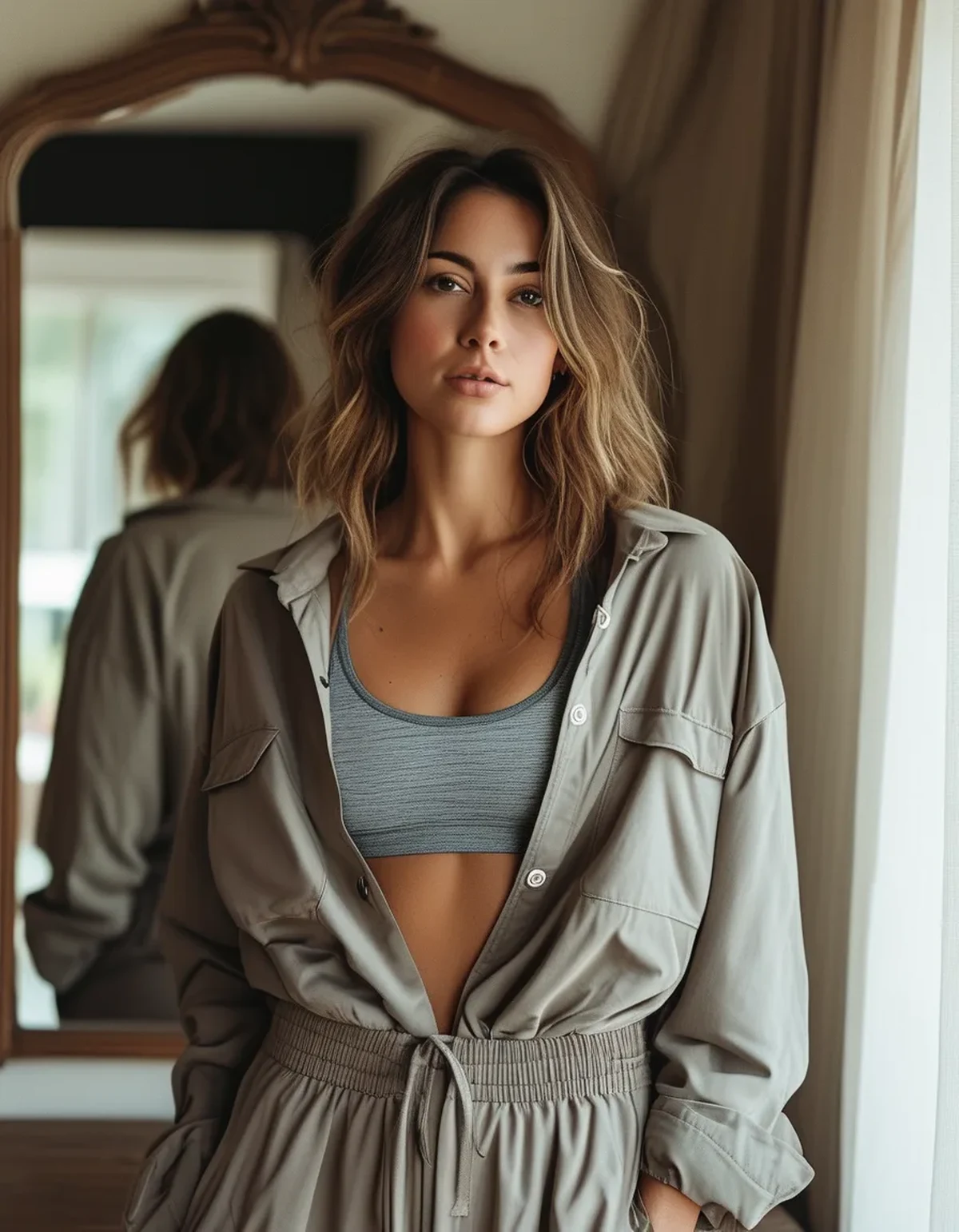
An open layer is the highest-value option. A shirt, cardigan, or overshirt worn open creates two vertical lines down the front of the set. Those lines break the color block and narrow the visual center. This is the single most reliable third piece and it works with almost every set.
Texture beats color. A layer in the same color family but a clearly different fabric — knit over smooth, linen over jersey — adds interest without adding a color decision. It also stays easier to wear than a bold contrast.
A shoe with a different finish. A leather or suede shoe against a technical-fabric set changes the whole read. A technical sneaker with the same finish as the set adds nothing.
A structured bag or a visible belt. Both introduce a hard edge against soft fabric, which is a texture contrast the eye registers immediately.
Jewelry counts, but only if it is visible from six feet away. A delicate chain against a crewneck does nothing at conversational distance. A cuff, hoops, or a longer pendant does.
5 Mistakes Everyone Makes With the Third Piece
Mistake 1: Choosing something that almost matches. A jacket in a slightly different shade of the same color reads as a failed match rather than a deliberate contrast. Either match exactly or clearly differ. The near-miss is the worst outcome and it is by far the most common.
Mistake 2: Adding a third piece in the same fabric. A matching jacket to a matching set produces a three-piece uniform, which is more uniform, not less. Sets sold as three-piece are the ones most likely to look like a tracksuit.
Mistake 3: Closing the layer. A buttoned or zipped third piece covers the set and turns it back into a single block, only bulkier. The value is in the open vertical lines. If you need to close it because you are cold, that is a different outfit.
Mistake 4: Overloading the top half. Layer plus scarf plus statement necklace plus bag strap puts four elements across the chest and shoulders. Two is the working limit for most frames.
Mistake 5: Forgetting the set was the point. A third piece so loud it becomes the outfit means you are wearing a jacket with something under it. The set should still read as the base — the third piece is punctuation, not the sentence.
How do you get six outfits out of one set?
Split it. This is the part most people skip.
Outfit 1: the set as sold, for the days it fits the occasion.
Outfit 2: set plus open neutral layer. Your default upgrade.
Outfit 3: set plus contrast texture shoe and a bag. Same clothes, different read.
Outfit 4: top of the set with jeans or trousers. Matched-set tops are usually well-cut and read as normal tops once separated. This is where half the value of the purchase actually lives.
Outfit 5: bottom of the set with a contrasting top. Same principle in reverse. A set legging or pant is just a good legging or pant.
Outfit 6: set under a longer coat as the seasons turn — the coat provides the vertical break and the set becomes the base layer.
Late-summer note: as you move into September, outfits 2 and 6 do the heavy lifting. A set that felt too warm in August becomes the ideal base under an open shirt once mornings cool, which is why sets often get more wear in fall than in the season they were bought for.
FAQ: Matching Set Questions, Answered
Should the third piece match my shoes?
Not necessarily, and forcing it usually creates a matchy-matchy result. What matters more is that the third piece and the shoes are not both trying to be the focal point. If the layer is the interesting element, keep the shoes quiet, and vice versa.
Do matching sets work for every body type?
Sets create an uninterrupted vertical line, which is generally lengthening — the issue is not body type but proportion of the individual pieces. A cropped top with a high-rise bottom emphasizes the waist; a longer top with the same bottom creates a longer single block. Choose the piece proportions rather than deciding sets do or do not work for you.
How do I keep the two pieces looking like a set after washing?
Wash and dry them together, every time, in cold water and out of the dryer. Matched dyes fade at the same rate only if they get the same treatment — the most common way sets stop matching is one piece getting washed twice as often as the other. If you split the set into separates, expect them to drift and plan to wear them apart from then on.
TL;DR:
- Sets read as uniforms when color and texture match; the fix is adding a variable, not adding a color.
- An open layer is the highest-value third piece because it creates two vertical lines through the color block.
- Near-matching is the worst outcome — either match exactly or contrast clearly.
- Splitting the set into separates is where most of the cost-per-wear actually comes from. Try the set with one open neutral layer this week and look at a photo rather than the mirror. The difference between a uniform and an outfit usually shows up on camera before it shows up in your reflection.
See It in Motion
Seen here: High Waist Yoga Leggings with Side Pockets — shop it on bubblelime.com
Keep Reading
This article is for general informational and styling purposes only. Fit, sizing, and product availability may vary.