Why a Matching Set Fits Differently Than the Same Size in Separates
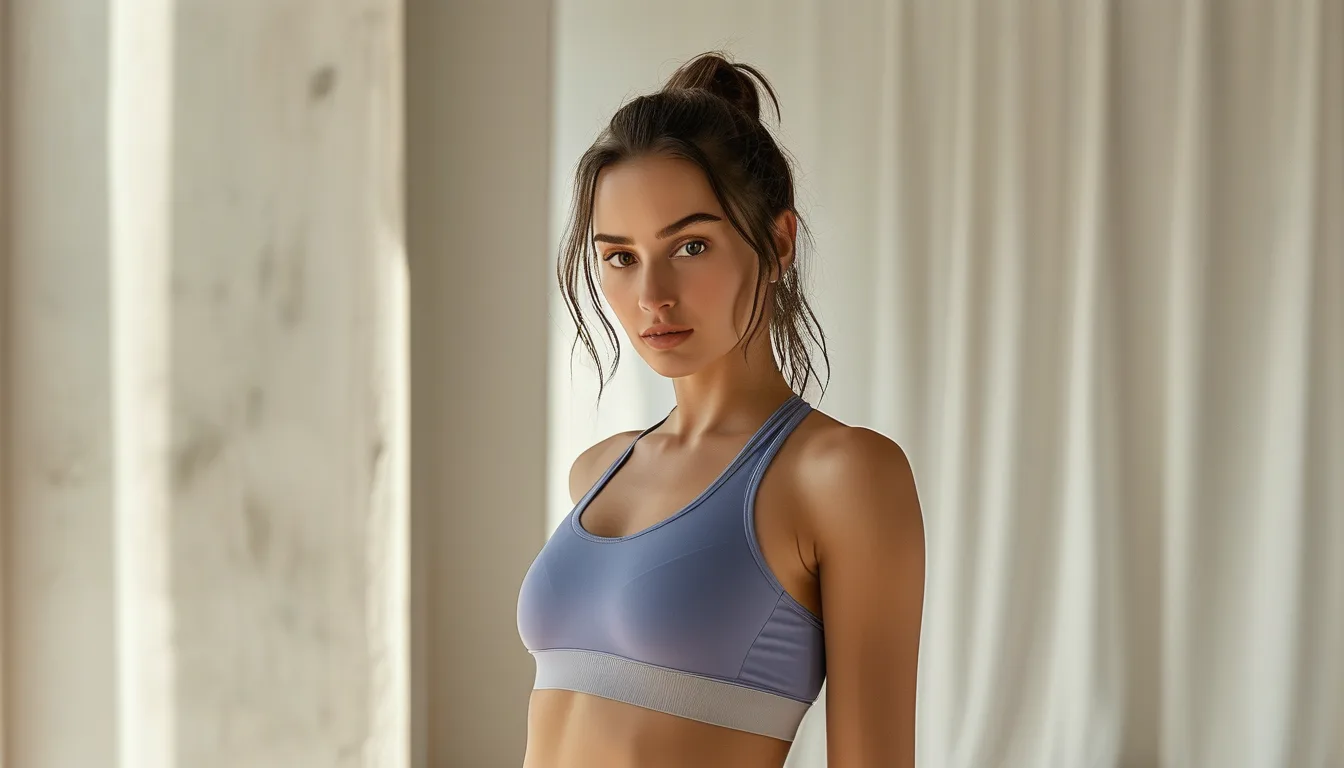
Quick Answer: Separates are graded independently - each piece gets its own fit model, its own ease allowance, and often its own fabric weight. A matching set is usually graded as one product against one body ratio, most commonly an assumption that your top and bottom sizes match. If your bust-to-hip relationship differs from that assumed ratio by even one size, one half of the set will fit and the other will not. Buy for the harder-to-fit half.
The set is not badly made. It is made for a ratio that is not yours.
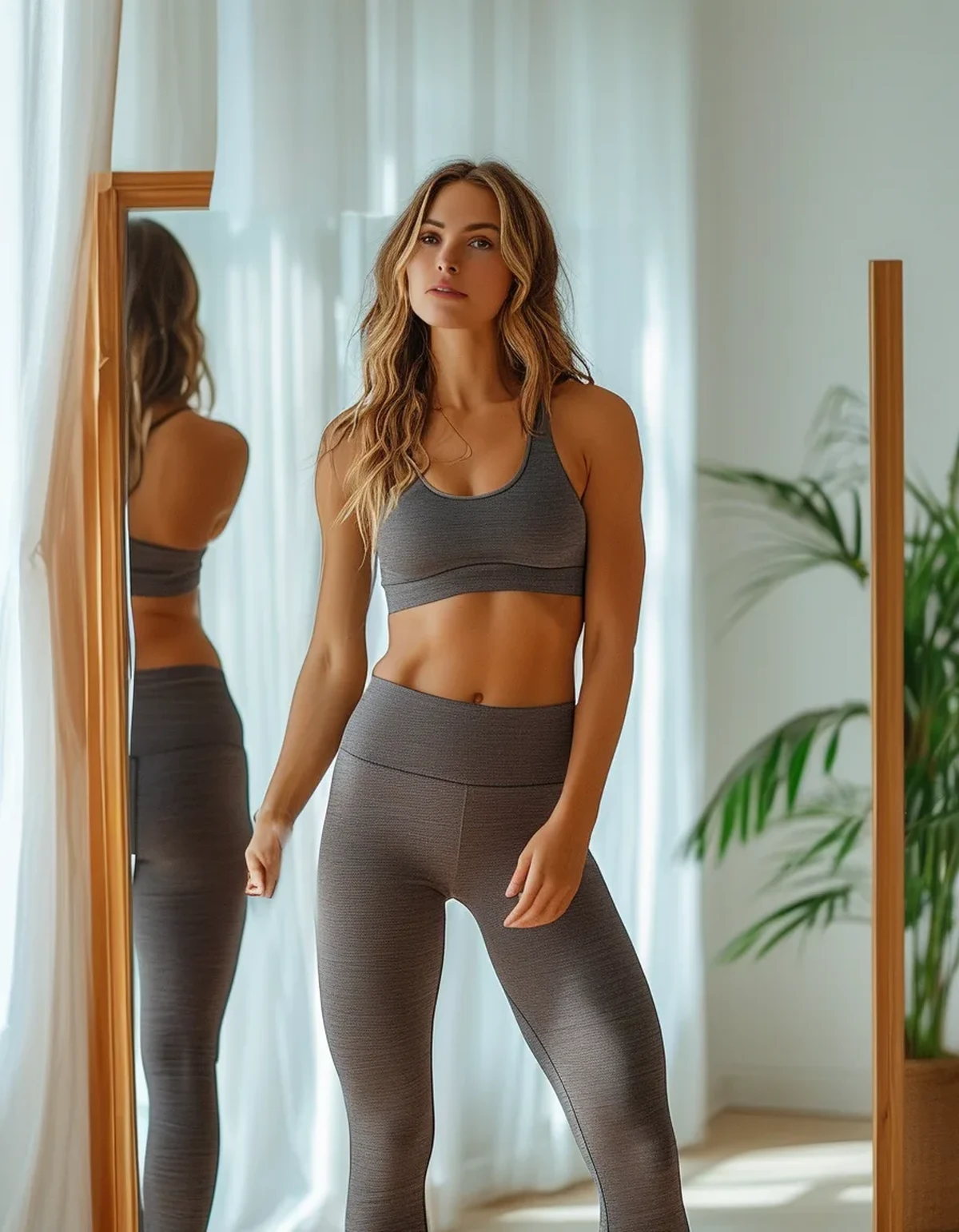
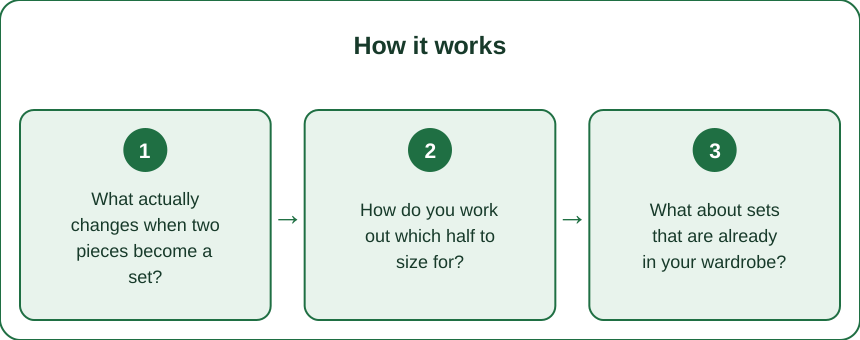
What actually changes when two pieces become a set?
The grading logic changes, and that is the whole story.
When a brand develops a legging, it fits it on a lower-body fit model and grades it across sizes by hip and waist circumference. When it develops a bra top, it fits that on an upper-body model and grades by underbust and cup volume. Two independent processes, two independent sets of assumptions. When you buy them separately, you get to pick a different size in each - which is exactly what most people quietly do without thinking of it as a workaround.
A matching set collapses that. It is developed and sold as one SKU in one size, which means the brand has to assume a relationship between the two halves. The near-universal assumption is that a customer’s top size and bottom size are the same. A meaningful share of bodies do not work that way - a smaller bust with fuller hips, or a fuller bust with narrow hips, is entirely ordinary and immediately breaks the assumption.
There are second-order effects too:
- Shared fabric. Sets are usually cut from one fabric so the color matches exactly. But the ideal weight for a supportive bra top is not the ideal weight for a legging that needs to not go sheer under load. One of the two ends up compromised, and it is usually the top.
- Shared dye lot as a constraint. Matching color is the selling point, which limits the brand’s ability to source a different, better-suited fabric for each half.
- Compressed size ranges. Sets frequently ship in fewer sizes than the same brand’s separates, because doubling the SKU count is expensive. Fewer sizes means coarser grading.
- Ease allowance chosen for the photograph. Sets are marketed on how they look as a unit, which tends to push both halves toward a snug fit that photographs cleanly and wears less comfortably.
None of this is a defect. It is what happens when a two-piece garment is priced and produced as one item.
How do you work out which half to size for?
Fit the half with less tolerance, then handle the other half separately.
The general rule: a bra top has a narrower window of acceptable fit than a legging. A legging one size up is slightly loose at the waist and still functions. A bra top one size up does not support, and one size down cuts in and spills. So in most cases, buy the set for your top size and accept that the bottoms may be roomier than ideal.
The exceptions are worth knowing:
- If the bottoms are a high-compression legging and you need that compression for running or lifting, reverse it - buy for the bottoms and treat the top as a light-support layer only.
- If the top is a loose crop or a boxy tee rather than a bra, it has plenty of tolerance. Buy for the bottoms.
- If the top is a longline bra with a band, the band position is decided by your underbust, and that is non-negotiable. Buy for it.
A concrete check before ordering. Find the brand’s size chart and locate the bust and hip measurement for the size you are considering. Compare the difference between them to the difference between your own bust and hip measurements. If the chart assumes a 9 inch bust-to-hip difference and yours is 4 inches or 14 inches, that set will not fit both halves. That is a two-minute check that prevents most set returns.
Then check whether the brand sells the halves separately. A surprising number do, at a small price premium over the bundle. Paying five dollars more to get a medium top and a large bottom is straightforwardly better than paying less for one size that half works.
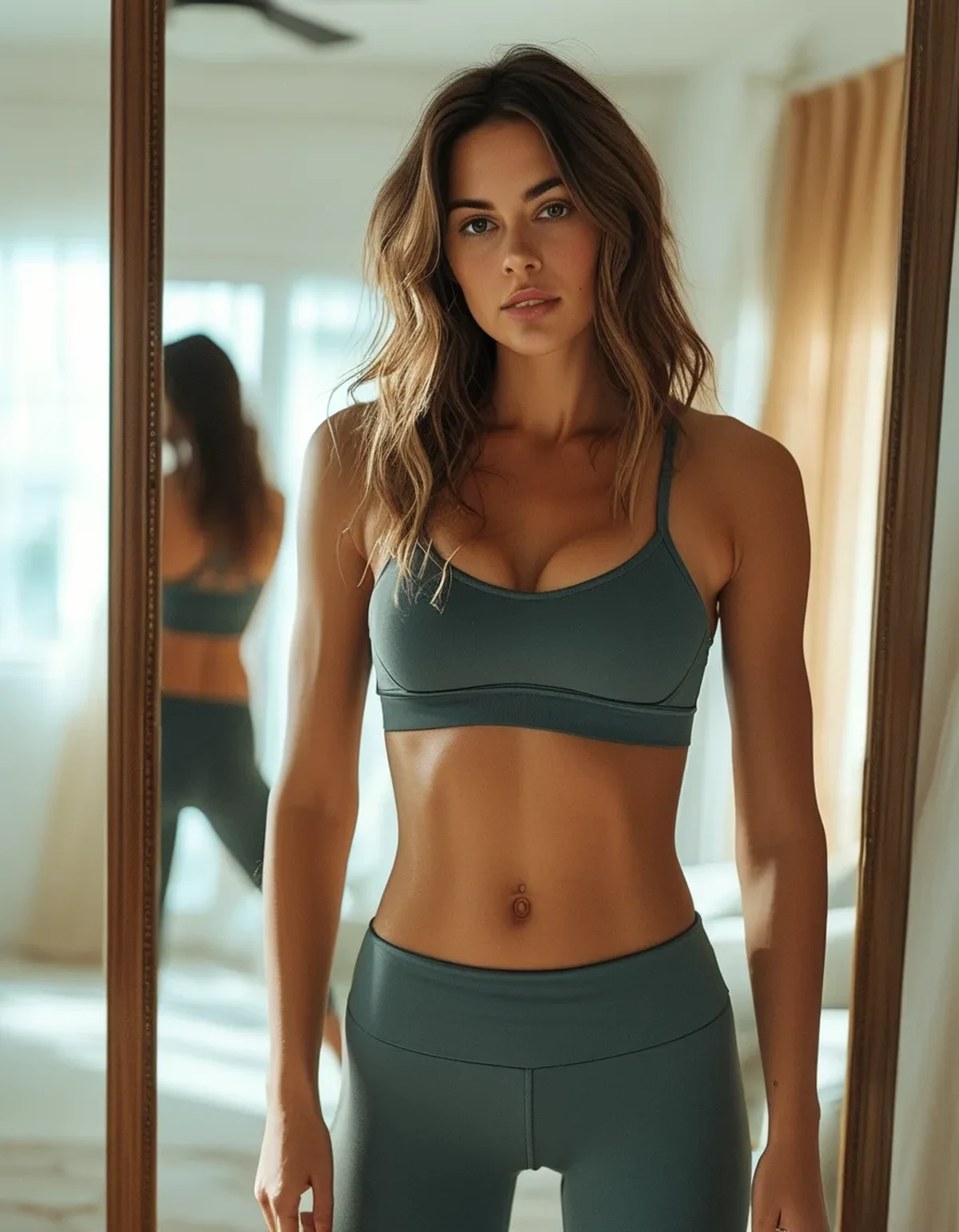
What about sets that are already in your wardrobe?
Most half-fitting sets can be rescued by changing what you pair them with rather than by altering them.
If the top fits and the bottoms are loose: wear the bottoms with a drawstring or add one - many waistbands have an internal channel already. Or use the top as the anchor piece and pair it with a legging you actually like, keeping the set bottoms for low-intensity days when the looseness does not matter.
If the bottoms fit and the top is tight: the top is probably still fine as a layering piece under an open shirt or a zip-up, where it is doing less work. Do not keep wearing a bra top that leaves marks - band pressure that indents skin is a sign the band is too small, not that it is supportive.
If the top is loose and unsupportive: a bra top with no band tension does nothing under impact. This one is not salvageable for training. Reassign it to yoga, walking, or wear-around-the-house duty.
Splitting the set deliberately is the most useful move. A matching set worn as a set is one outfit. Split across your existing pieces, those two garments generate four or five. Pair the top with a contrasting legging, the bottoms with a plain tee, and the visual read is more interesting than the matched version anyway.
One caution on washing. Two pieces from the same dye lot fade at different rates if worn at different frequencies, and the mismatch becomes obvious under daylight. If you want the set to stay a set, wash and wear both halves together.
5 Mistakes People Make Buying Activewear Sets
1. Ordering the size they wear in that brand’s leggings. Leggings run the largest tolerance of any activewear piece. Whatever size works there is the least reliable predictor of set fit.
2. Sizing up to fix a tight top. This makes the band loose - which removes the support entirely - while making the bottoms slide. Sizing up fixes width, not band tension or strap length, and those are usually the actual problem.
3. Ignoring the fabric weight listed in the description. A set listed at 200gsm or under is a light fabric doing double duty. It will likely be sheer under a squat and under-supportive at the bust. The number is often in the spec and almost never read.
4. Judging fit standing still in front of a mirror. Squat, reach overhead, and jog on the spot in the fitting room or at home before the return window closes. Sets fail under movement far more often than they fail standing.
5. Assuming the set will match after six months. Different wear frequency plus different fabric stress means the halves diverge in color and in stretch recovery. If matching is the point, treat them as a pair in the laundry too.
FAQ: Matching Set Sizing Questions, Answered
Can I buy a set in two sizes and return one half?
Usually not - most retailers treat a set as a single item and require both pieces back. If the brand sells the halves separately, that is the cleaner route even at a small premium.
Why do sets feel tighter than separates in the same size?
Sets are frequently graded with less ease so the pair photographs as a clean silhouette. The fabric is also shared, so it is often a compromise weight that does not stretch the way a purpose-built legging fabric would.
Is a matching set worth it if only one half fits?
Only if the half that fits is a piece you would have bought on its own. Otherwise you have paid set price for one garment.
How do I check fit before ordering online?
Compare the bust-to-hip difference in the brand’s size chart to your own. A gap of more than a couple of inches between the chart’s assumed ratio and yours means one half will not fit.
Do sets shrink evenly?
Rarely. The top gets washed more often in practice, and lighter-weight knit tops lose recovery faster than compressive bottoms. Washing both halves together on the same cycle keeps them closer.
TL;DR:
- Separates are graded independently; a set is graded against one assumed body ratio, usually top size equals bottom size.
- Buy for the half with the narrower fit window - normally the bra top, unless the bottoms are high-compression.
- Compare the size chart’s bust-to-hip difference to your own before ordering. A big gap means one half will fail.
- Sets often share a compromise fabric weight, which is why tops under-support and bottoms sometimes go sheer.
- Split a half-fitting set across your wardrobe rather than wearing it only as a pair.
Do the bust-to-hip arithmetic once. It takes two minutes and prevents most set returns.
See It in Motion
Seen here: High Waist Yoga Leggings with Inner Pocket — shop it on bubblelime.com
Keep Reading
This article is for general informational and styling purposes only. Fit, sizing, and product availability may vary.